
Why Your Carlsbad & North County San Diego Energy Bills Are So High (And 12 Ways Your HVAC Can Lower Them)
(619) 361-7325
Why Your Carlsbad & North County San Diego Energy Bills Are So High (And 12 Ways Your HVAC Can Lower Them)
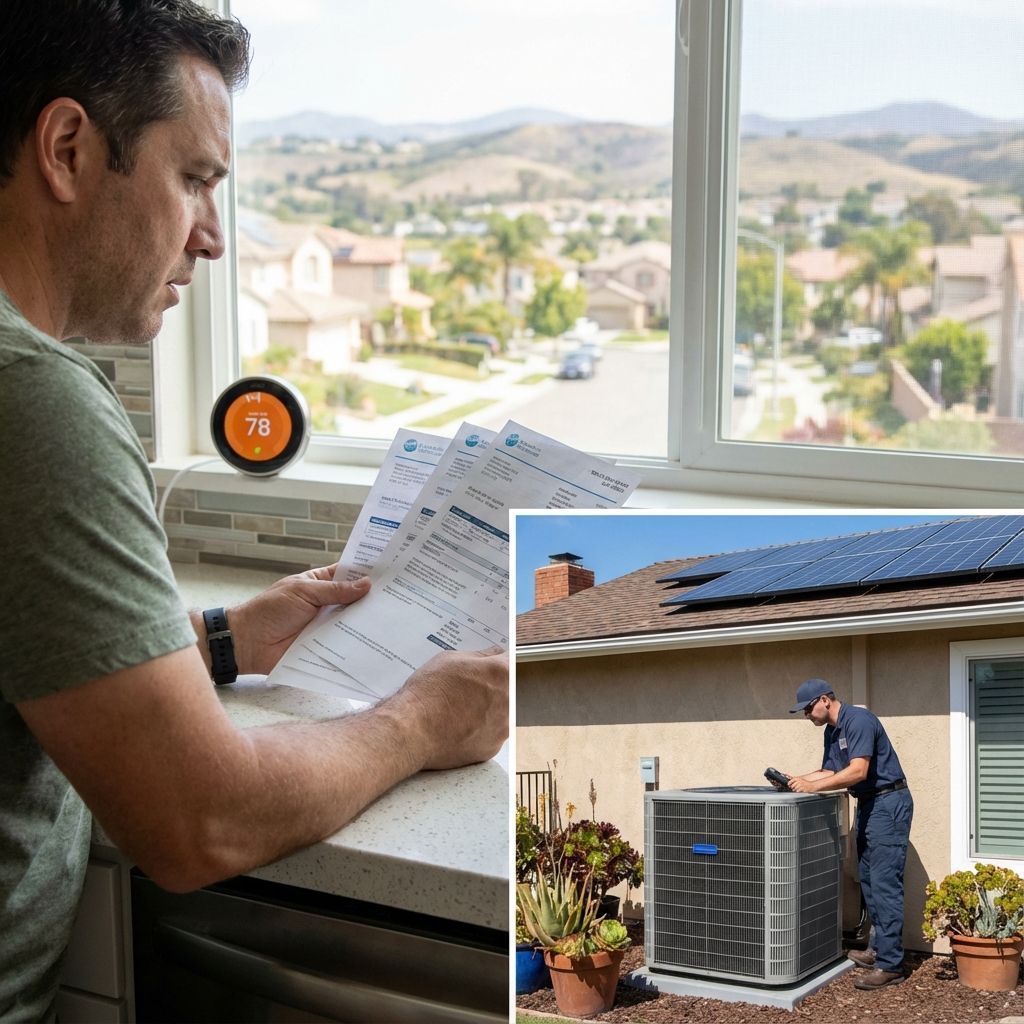
Are your San Diego Gas & Electric (SDG&E) bills making your jaw drop? You're not alone. Carlsbad and North County San Diego residents consistently pay some of the highest electricity rates in the nation—and your HVAC system is likely the biggest culprit behind those shocking monthly charges.
With electricity rates in San Diego averaging 40-48 cents per kilowatt-hour (compared to the national average of 16 cents), every inefficiency in your heating and cooling system translates directly into wasted dollars. The good news? Most homeowners can reduce their energy bills by 20-40% with the right HVAC improvements and maintenance strategies.
In this comprehensive guide, we'll break down exactly why your energy bills are so high, how your HVAC system impacts costs, and actionable steps you can take today to start saving money.
Understanding San Diego's High Energy Costs
Before diving into HVAC-specific solutions, it's important to understand why SDG&E rates are so high compared to the rest of the country.
Why SDG&E Rates Are Among the Nation's Highest
Geographic Challenges: San Diego is at the end of California's power grid, requiring energy to travel long distances through transmission lines, which increases delivery costs.
Infrastructure Investment: SDG&E has invested heavily in wildfire prevention measures, underground power lines, and grid modernization—costs that are passed on to ratepayers.
Renewable Energy Mandate: California's aggressive renewable energy goals require utilities to purchase more expensive clean energy, impacting rates.
Time-of-Use Pricing: SDG&E uses time-of-use rate structures where electricity costs more during peak hours (typically 4 PM - 9 PM), when your AC is working hardest.
How Much Does HVAC Really Impact Your Bill?
Your heating and cooling system accounts for approximately 50-70% of your total energy consumption in Carlsbad and North County. During summer months, this percentage can climb even higher, especially in inland areas like Vista, San Marcos, and Escondido where temperatures regularly exceed 85-95 degrees.
Here's what that means in real dollars:
Average Carlsbad/North County home: $150-250 monthly electric bill
HVAC portion: $75-175 per month
Potential savings with efficiency improvements: $30-70+ per month
Annual savings potential: $360-840+
For a typical North County homeowner, that's enough to cover several months of car payments, a nice vacation, or significant contributions to savings—all from optimizing your HVAC system.
The Top HVAC-Related Reasons Your Energy Bills Are High
1. Your AC System Is Old and Inefficient
Air conditioners older than 10-12 years are energy vampires. Here's why:
SEER Rating Differences: Older units typically have SEER (Seasonal Energy Efficiency Ratio) ratings of 8-10. Modern systems achieve SEER ratings of 16-25. That's a 60-150% efficiency improvement.
Real-World Example: Running an old 10 SEER unit costs approximately $200/month during San Diego's cooling season. Upgrading to a 16 SEER system could reduce that to $125/month—saving $75 monthly or $900 annually.
Wear and Tear: As systems age, components wear down, refrigerant may leak slightly, and overall performance degrades. Even with maintenance, an aging system simply can't match newer technology's efficiency.
Signs Your System Is Too Old:
Manufactured before 2010
Frequent repairs needed
Energy bills steadily increasing year over year
System runs constantly but struggles to cool effectively
Uses R-22 refrigerant (being phased out, expensive to refill)
2. Neglected Maintenance Is Costing You Money
One of the most common reasons for high energy bills is simply lack of maintenance. When HVAC systems aren't properly maintained, efficiency plummets.
Dirty Filters = Wasted Energy: A clogged air filter forces your system to work 15-20% harder, consuming significantly more electricity. In Carlsbad and North County's dusty, coastal environment, filters accumulate debris quickly—especially salt air, pollen, and fine sand particles.
Dirty Coils = Poor Performance: Both evaporator coils (indoor) and condenser coils (outdoor) need regular cleaning. Salt air in coastal areas accelerates buildup. Dirty coils reduce heat transfer efficiency by up to 30%.
Low Refrigerant = Overworked Compressor: Even small refrigerant leaks force your system to run longer cycles, dramatically increasing energy consumption while failing to cool effectively.
Annual Maintenance Savings: Professional HVAC maintenance costs $80-150 annually but typically saves homeowners $15-30 monthly on energy bills—a 200-300% return on investment.
3. Your Thermostat Settings Are Working Against You
Thermostat mismanagement is one of the easiest money-wasters to fix, yet many San Diego homeowners make these mistakes:
Setting the Temperature Too Low: Every degree below 78°F increases energy consumption by approximately 3-5%. Setting your AC to 68°F instead of 75°F can add $30-50 to your monthly bill.
Not Using Programmable Features: Cooling your home when you're at work or asleep wastes money. Programmable thermostats can reduce cooling costs by 10-15% by automatically adjusting temperatures when you're away.
Fighting Your System: Constantly adjusting the thermostat up and down causes inefficient cycling. Your system works most efficiently maintaining a consistent temperature.
Outdated Manual Thermostats: Old dial thermostats lack the precision of digital or smart thermostats, potentially causing 5-10% efficiency loss through temperature drift and inaccurate readings.
4. Poor Insulation and Air Sealing
Your HVAC system can only be as efficient as your home's envelope allows. If cool air is escaping, your AC will run continuously trying to compensate.
Attic Insulation: San Diego's sunny climate creates extreme attic temperatures—often 130-150 degrees in summer. Inadequate insulation allows this heat to radiate into living spaces, forcing your AC to work overtime.
Recommended R-Value: San Diego homes should have R-30 to R-38 attic insulation. Many older homes have R-11 or less.
Air Leaks: Gaps around windows, doors, ductwork connections, and electrical outlets allow conditioned air to escape. The Department of Energy estimates that air leaks can account for 25-40% of cooling costs.
Single-Pane Windows: Common in older San Diego homes, single-pane windows allow significant heat transfer. While expensive to replace, window films or cellular shades can help.
5. Ductwork Problems Are Bleeding Money
Leaky, damaged, or poorly designed ductwork is one of the most overlooked causes of high energy bills in San Diego homes.
Energy Loss Statistics: The average duct system loses 20-30% of conditioned air through leaks, holes, and poor connections. In severe cases, losses can exceed 40%.
Common Ductwork Issues:
Disconnected ducts in attics or crawlspaces
Holes or tears in flexible ductwork
Poor sealing at register boots and connection points
Inadequate insulation on ducts in unconditioned spaces
Crushed or kinked flexible ducts reducing airflow
Real-World Impact: If your monthly cooling costs are $150, ductwork leaks may be wasting $30-45 of that—$360-540 annually going straight into your attic or crawlspace instead of cooling your home.
Testing: Professional duct testing can identify leaks and measure exactly how much air you're losing. Sealing ductwork typically costs $400-1,500 but pays for itself within 2-3 years through energy savings.
6. Incorrect System Sizing
Counterintuitively, bigger isn't better when it comes to HVAC systems. Incorrectly sized units—either too large or too small—cost you money.
Oversized Systems:
Cycle on and off frequently (short cycling)
Don't run long enough to properly dehumidify
Wear out faster due to constant starts and stops
Consume more energy during startup surges
Undersized Systems:
Run continuously without reaching desired temperature
Consume maximum energy without providing comfort
Wear out prematurely from overwork
Manual J Calculation: Proper sizing requires a Manual J load calculation that considers your home's square footage, insulation, windows, orientation, and local climate. Many older San Diego homes have systems that were simply sized based on square footage rules of thumb, leading to inefficiency.
7. You're Not Taking Advantage of Off-Peak Hours
SDG&E's time-of-use rates create opportunities for savvy homeowners to save money—but require strategic thinking.
Understanding TOU Rates:
Peak hours (4 PM - 9 PM weekdays): Highest rates (45-58 cents/kWh in summer)
Off-peak hours (before 4 PM and after 9 PM weekdays, all weekend): Lower rates (28-35 cents/kWh)
Super off-peak (midnight to 6 AM): Lowest rates (19-24 cents/kWh)
Pre-Cooling Strategy: Cool your home to 72-73°F in the early afternoon (off-peak hours), then allow the temperature to rise to 78-79°F during expensive peak hours. Your home's thermal mass maintains comfort while avoiding high-rate electricity.
Smart Thermostat Integration: Modern smart thermostats can integrate with TOU schedules, automatically shifting cooling to off-peak hours without requiring you to manually adjust settings daily.
8. Blocked Vents and Poor Airflow
Restricted airflow forces your HVAC system to work harder, consuming more energy while delivering less comfort.
Common Airflow Problems:
Furniture blocking supply or return vents
Closed vents in "unused" rooms (this actually reduces efficiency)
Dirty return grilles restricting air intake
Undersized return ducts creating negative pressure
Closed interior doors preventing proper circulation
The Myth of Closing Vents: Many homeowners believe closing vents in unused rooms saves energy. This is false. Modern HVAC systems are balanced systems—closing vents disrupts this balance, increases pressure, can cause duct leaks, and forces the system to work harder.
Airflow Testing: HVAC professionals can measure airflow at each vent to identify restrictions and balance your system for optimal efficiency.
9. Outdoor Unit Placement and Conditions
Your outdoor condenser unit's location and condition significantly impact efficiency and costs.
Direct Sunlight: Condensers work by releasing heat. When placed in direct sunlight, they must work harder to expel heat, consuming 5-10% more energy. Afternoon western sun is particularly problematic in San Diego.
Restricted Clearance: Outdoor units need at least 2 feet of clearance on all sides for proper airflow. Landscaping, storage items, or walls too close restrict airflow and reduce efficiency.
Coastal Corrosion: For San Diego homeowners near the coast, salt air accelerates corrosion on condenser coils and fins. This buildup acts as insulation, preventing proper heat transfer and forcing the system to run longer.
Ground-Level Heat: Concrete, asphalt, or rock surfaces near the condenser reflect heat back toward the unit, reducing efficiency. Grass, shade, or raised platforms help.
10. Running the Wrong HVAC Mode
San Diego's mild climate creates unique opportunities for energy savings through proper mode selection.
Fan Setting - "Auto" vs. "On":
Auto: Fan runs only when cooling. More energy-efficient.
On: Fan runs continuously. Increases energy consumption by 15-25% but can improve air circulation and filtration.
**Many homeowners inadvertently leave their fan set to "On," wasting $20-40 monthly.
Cool Mode vs. Fan Mode: Using "fan only" mode when minimal cooling is needed can save energy during San Diego's mild evenings and mornings, especially in coastal areas.
Heat Pump Advantage: For San Diego's climate, heat pumps offer superior efficiency for both cooling and heating compared to traditional AC + furnace combinations.
11. Humidity Management Issues
While San Diego is known for pleasant weather, coastal areas experience significant humidity, especially during "May Gray" and "June Gloom."
Why Humidity Matters for Energy Costs: High humidity makes your home feel warmer than it actually is, tempting you to lower the thermostat. Every degree lower equals higher energy costs.
AC Dehumidification: Air conditioners naturally remove humidity, but this only happens during longer run cycles. Short-cycling systems (from oversizing) don't dehumidify effectively.
Solutions:
Ensure proper system sizing for adequate runtime
Consider variable-speed systems that excel at humidity control
Use bathroom and kitchen exhaust fans to remove humidity at the source
Fix any moisture intrusion problems (leaks, poor drainage)
12. Ignoring Your Ceiling Fans
Ceiling fans are powerful tools for reducing HVAC costs, but only when used correctly.
The Cooling Effect: Ceiling fans don't cool air—they cool people through wind chill effect. This allows you to raise your thermostat by 3-4°F while maintaining the same comfort level.
Energy Savings: Raising your thermostat from 75°F to 78°F while using ceiling fans can save 10-15% on cooling costs.
Common Mistakes:
Running fans in unoccupied rooms (wastes energy)
Wrong rotation direction (counterclockwise in summer)
Using fans while windows are open (introduces hot outside air)
Leaving fans on when away (they cool people, not rooms)
12 Actionable Ways to Lower Your Energy Bills
Now that you understand why your bills are high, here are specific actions you can take to start saving immediately.
Immediate Actions (This Week)
1. Replace Your Air Filter Today
Cost: $5-30
Time: 5 minutes
Savings: $15-30/month
Check your filter right now. If you can't see light through it, replace it immediately. Set a monthly reminder to check it going forward.
2. Adjust Your Thermostat Settings
Cost: $0
Time: 2 minutes
Savings: $20-40/month
Set your cooling to 78°F (or as warm as comfortable). Every degree above 72°F saves 3-5%. Use programmable features to raise the temperature when you're away.
3. Clear Your Outdoor Unit
Cost: $0
Time: 15 minutes
Savings: $10-20/month
Remove leaves, grass clippings, and debris from around your condenser. Trim back vegetation to maintain 2 feet of clearance. Gently rinse the exterior with a garden hose (low pressure).
4. Unblock All Vents
Cost: $0
Time: 15 minutes
Savings: $10-15/month
Walk through your home and remove furniture, curtains, or objects blocking supply and return vents. Open all vents, even in rooms you rarely use.
5. Use Ceiling Fans Strategically
Cost: $0
Time: 5 minutes
Savings: $15-25/month
Ensure fans rotate counterclockwise in summer. Turn them on only in occupied rooms. Raise your thermostat 3-4°F and let fans provide comfort.
Short-Term Actions (This Month)
6. Schedule Professional HVAC Maintenance
Cost: $80-150
Time: 1-2 hours
Savings: $15-30/month
Payback period: 3-6 months
Don't skip annual maintenance. Professional cleaning, adjustment, and inspection can improve efficiency by 15-20%. For Carlsbad and coastal North County homes, consider bi-annual maintenance due to salt air corrosion and marine layer moisture.
7. Upgrade to a Smart Thermostat
Cost: $120-250 installed
Time: Professional installation (1 hour)
Savings: $15-40/month
Payback period: 3-8 months
Smart thermostats learn your patterns, optimize for TOU rates, and allow remote control. Many qualify for SDG&E rebates. Brands like Nest, Ecobee, and Honeywell offer excellent options.
8. Implement Pre-Cooling for TOU Rates
Cost: $0
Time: Ongoing habit
Savings: $20-50/month
Cool your home during off-peak hours (before 4 PM) to 72-73°F, then let it coast through peak hours (4-9 PM) rising to 78-79°F. Carlsbad and North County homes' thermal mass makes this very effective, especially in well-insulated coastal homes.
9. Seal Air Leaks Around Doors and Windows
Cost: $20-50 for weatherstripping and caulk
Time: 2-4 hours
Savings: $15-35/month
Payback period: 1-2 months
Apply weatherstripping to doors, caulk around windows, and seal visible gaps. Focus on the biggest leaks first. This DIY project provides excellent return on investment.
Medium-Term Investments (This Year)
10. Professional Duct Sealing and Insulation
Cost: $400-1,500
Time: Professional service (4-8 hours)
Savings: $30-60/month
Payback period: 7-24 months
Professional duct sealing eliminates the 20-30% energy loss most San Diego homes experience. Use Aeroseal or manual sealing depending on your situation. Ensure attic ducts are well-insulated.
11. Add or Upgrade Attic Insulation
Cost: $1,000-3,000
Time: Professional installation (1-2 days)
Savings: $25-60/month
Payback period: 20-48 months
Bringing attic insulation from R-11 to R-38 can dramatically reduce cooling loads. Many Carlsbad and North County homes have inadequate insulation, especially those built before 2000. Check for SDG&E rebates.
12. Upgrade to a High-Efficiency HVAC System
Cost: $5,000-12,000
Time: Professional installation (1-2 days)
Savings: $50-100+ monthly
Payback period: 50-120 months (but includes comfort improvement and equipment replacement)
For systems over 12-15 years old, replacement often makes sense. Modern high-SEER systems (16-20+) provide substantial savings. Variable-speed units offer even better efficiency and comfort. Consider heat pumps for Carlsbad's mild coastal climate—they excel in our moderate temperature range.
Understanding SDG&E Rebates and Incentives
Carlsbad and North County San Diego homeowners have access to several programs that can offset the cost of energy-efficiency improvements:
HVAC Rebates: SDG&E offers rebates for qualifying high-efficiency AC systems, heat pumps, and smart thermostats. Rebates typically range from $100-300 but vary by specific equipment.
Home Energy Efficiency Surveys: Free or discounted energy audits identify where your home is losing energy and what improvements offer the best return on investment.
Time-of-Use Rate Programs: Enrolling in the right rate plan can save money without any equipment changes, particularly for households that can shift usage to off-peak hours.
Federal Tax Credits: The Inflation Reduction Act extended tax credits for high-efficiency HVAC equipment. Qualifying systems may earn 30% of cost back (up to annual limits).
Financing Programs: SDG&E and third-party lenders offer financing for efficiency upgrades, sometimes at 0% interest for qualified improvements.
When to Call a Professional
While many energy-saving strategies are DIY-friendly, certain issues require professional HVAC expertise:
Call immediately for:
System not cooling despite running continuously
Strange odors (burning, electrical, gas)
Refrigerant leaks (ice on lines, hissing sounds)
Electrical problems (breakers tripping, sparking)
Water leaking from indoor unit
Schedule professional service for:
Annual or bi-annual maintenance (especially important in coastal Carlsbad)
Energy audits and efficiency assessments
Duct testing and sealing
System sizing calculations before replacement
Thermostat upgrades if uncomfortable with DIY installation
Insulation evaluation and installation
Salt air corrosion inspection for coastal homes
Real San Diego County Homeowner Savings Examples
Coastal Carlsbad Home (near Village): 1,800 sq ft home, 18-year-old AC
Old system: $180/month summer bills
Actions: New 16 SEER AC + smart thermostat + duct sealing
Result: $95/month summer bills
Savings: $85/month ($1,020/year)
Carlsbad Ranch Area Home: 2,200 sq ft home, 15-year-old AC with salt air corrosion
Old system: $210/month summer bills
Actions: Coastal-rated 18 SEER system + bi-annual maintenance + coil protection
Result: $120/month summer bills
Savings: $90/month ($1,080/year)
Inland Encinitas Home: 2,400 sq ft home, 12-year-old AC
Old system: $240/month summer bills
Actions: Added attic insulation + professional maintenance + thermostat adjustment
Result: $165/month summer bills
Savings: $75/month ($900/year)
Oceanside Condo (near coast): 950 sq ft condo, 10-year-old AC
Old system: $110/month year-round
Actions: Smart thermostat + TOU optimization + monthly filter changes
Result: $75/month year-round
Savings: $35/month ($420/year)
Your Action Plan: What to Do Now
Ready to start saving money on your San Diego energy bills? Here's your step-by-step plan:
This Week:
Replace your air filter
Adjust thermostat to 78°F
Clear outdoor unit area
Unblock all vents
Check ceiling fan rotation
This Month:
Schedule HVAC maintenance with a trusted San Diego contractor
Research smart thermostats and SDG&E rebates
Seal obvious air leaks (doors, windows)
Start implementing TOU pre-cooling strategy
This Quarter:
Complete smart thermostat installation
Schedule duct testing if not done recently
Evaluate attic insulation needs
Get quotes for major improvements if system is old
This Year:
Complete any needed duct sealing or insulation upgrades
If system is 12+ years old, get replacement quotes
Review all improvements' impact on bills
Establish ongoing maintenance schedule
Start Saving on Your Energy Bills Today
High energy bills don't have to be an inevitable part of Carlsbad and North County living. While we can't control SDG&E's rates, we can control how efficiently our homes use that expensive electricity.
Your HVAC system is the single biggest factor in your energy costs—and the single biggest opportunity for savings. Whether you start with simple DIY actions or invest in major efficiency upgrades, every step toward a more efficient home puts money back in your pocket month after month, year after year.
Don't wait until your next shocking bill arrives. Take action today to start saving money while improving your home's comfort.
Need help maximizing your HVAC efficiency and lowering your energy bills? Our experienced Carlsbad-based HVAC technicians specialize in energy-efficiency solutions tailored to our unique coastal climate. We'll assess your current system, identify your biggest opportunities for savings, and provide honest recommendations that fit your budget.
📞 Call (619) 361-7325 for a free energy-efficiency consultation
Based in Carlsbad, we proudly serve all of North County San Diego including Encinitas, Oceanside, Vista, San Marcos, Escondido, and surrounding communities with fast, professional service from licensed, insured technicians who understand local climate challenges and energy costs.
Heat Cool SD - Your Carlsbad neighbor and partner in energy-efficient home comfort across North County San Diego.
About Heat Cool SD
Heat Cool SD is Carlsbad's trusted HVAC specialist, serving North County San Diego homeowners dealing with high SDG&E costs and coastal climate challenges. Based at 861 Grand Ave in Carlsbad, our certified technicians understand the unique needs of coastal communities—from salt air corrosion to marine layer humidity. We offer comprehensive services including high-efficiency system installations, professional maintenance, duct sealing, and energy audits—all designed to lower your bills while improving comfort. Licensed, insured, and committed to your satisfaction. Proudly serving Carlsbad, Encinitas, Oceanside, Vista, San Marcos, and all of North County San Diego.
You might also like
Blog
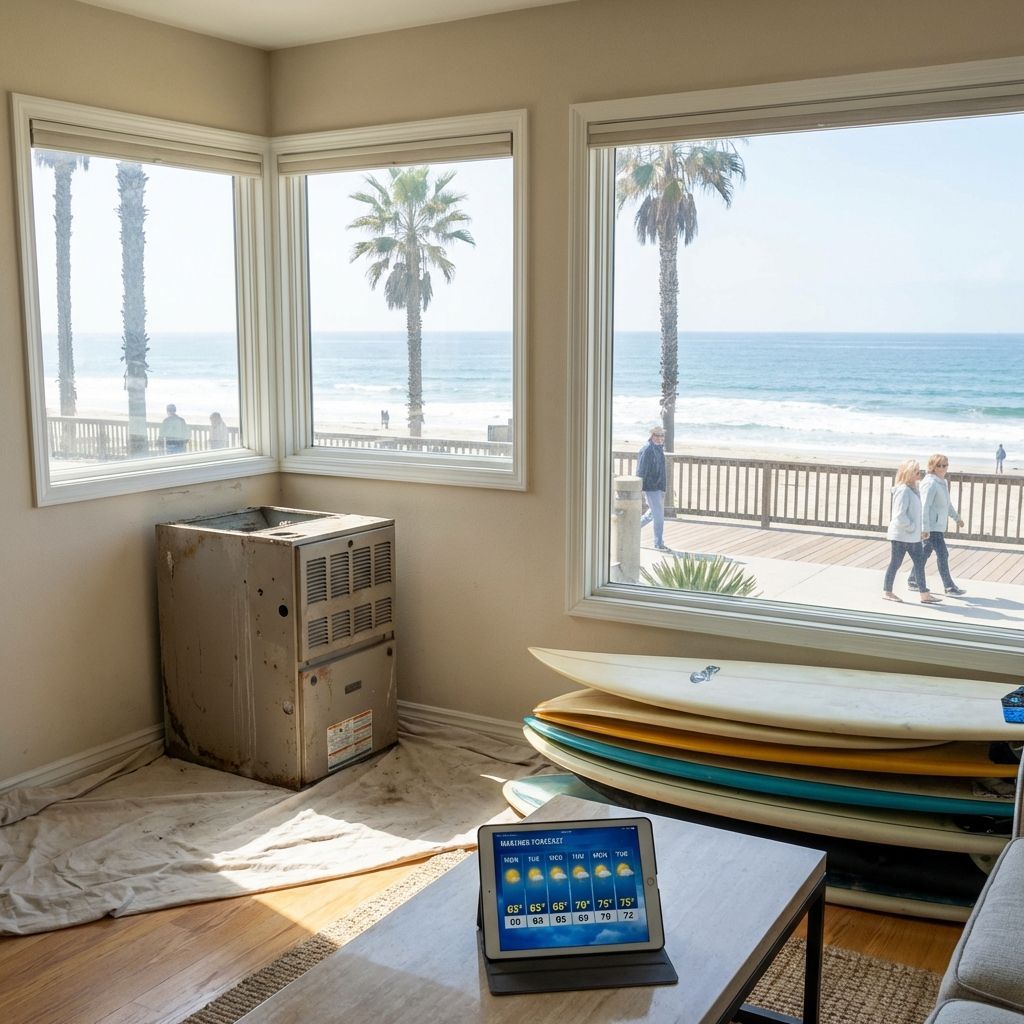
Here's a conversation that happens constantly in Carlsbad: Someone moves here from Chicago, Denver, or anywhere with real winters. They get comfortable. October arrives, evenings drop to 55°F, and they think — I probably don't need to worry about heat in San Diego. Then January hits. It's 42°F outside and their house won't get above 62°F. They go looking for the furnace and discover it hasn't been serviced since the Obama administration. Or worse: they moved into a newer home in Bressi Ranch or La Costa that has a heat pump they've never touched, and they have no idea why it's blowing lukewarm air when they actually need it. Carlsbad's mild climate creates a specific problem with home heating: because you rarely need it, you never think about it — until the one week a year you genuinely do. The Truth About Carlsbad Winters San Diego County's coastal communities have some of the mildest winters in the continental United States. Average January lows in Carlsbad sit around 48-52°F. Most years, you'll have more 70°F days in February than genuinely cold ones. But "mild" doesn't mean "no heating needed." A few realities Carlsbad homeowners face every winter: Nighttime temperatures regularly drop into the low 40s, especially in the inland parts of Carlsbad — east of the 5 freeway, near Rancho Carlsbad, and around the upper La Costa neighborhoods that sit further from the ocean's moderating influence. January and February cold snaps can bring overnight lows into the high 30s. For a week or two each winter, homes in Carlsbad genuinely need functional heating to stay comfortable — and to protect pipes. Marine layer mornings in fall and winter can keep daytime temperatures in the mid-50s for days at a stretch. A house that won't warm up by noon becomes a serious comfort problem. Coastal homes are built for airflow, not insulation. Many Carlsbad homes — particularly older ones in the Village, Terramar, and coastal Carlsbad — have minimal insulation compared to homes built in colder climates. They lose heat quickly when temperatures drop. The combination of infrequent but real cold nights, under-insulated construction, and heating systems that go untouched for 11 months a year is why heating calls spike every January in North County San Diego. What Type of Heating System Does Your Carlsbad Home Have? Before you can maintain or troubleshoot your heating, you need to know what you're working with. Carlsbad's housing stock spans several decades and includes multiple system types. Gas Furnaces are the most common heating system in Carlsbad homes built before the mid-2010s. Natural gas is supplied by SoCalGas throughout Carlsbad, and a forced-air furnace paired with central ductwork is the standard setup in most single-family homes. Gas furnaces in Carlsbad's mild climate can realistically last 20-25 years — longer than the national average — because they run so infrequently. The flip side: low-use systems often have maintenance issues that go undetected for years. A furnace that hasn't been inspected in a decade may have cracked heat exchangers, dirty burners, or a failing ignitor that nobody knows about until the first cold night of the year. Heat Pumps are increasingly common in newer Carlsbad developments — Bressi Ranch, Robertson Ranch, Aviara, and newer La Costa construction frequently spec heat pumps rather than separate furnace/AC systems. Heat pumps are ideal for San Diego's climate because they provide both cooling and heating efficiently in mild temperatures. The most common heat pump complaint in Carlsbad: homeowners don't know how to operate them in heating mode, or they've set them to a mode that doesn't work well in cooler weather. Heat pumps become less efficient as outdoor temperatures drop below 40°F — rare but not unheard of in Carlsbad's coldest nights. Ductless Mini-Split Systems have grown rapidly in Carlsbad, especially in older homes that lack ductwork, ADUs, and room additions. Mini-splits provide zoned heating and cooling but require specific maintenance that most homeowners aren't doing. Electric Wall Heaters or Baseboard Heat — older Carlsbad homes, particularly condos and smaller units near the Village and Carlsbad Village Drive corridor, sometimes have electric resistance heating. These are expensive to operate but inexpensive to maintain. Ask yourself: When did you last have your heating system professionally inspected? In Carlsbad, if the answer is "more than two years ago" — or "I'm not sure it's ever been serviced" — you're overdue. Why Carlsbad Heating Systems Fail at the Worst Possible Moment The pattern is predictable and entirely preventable. A Carlsbad furnace or heat pump sits idle from roughly April through October — six to eight months of zero use. During that time, dust accumulates on burners and heat exchangers. Ignitors become fragile from thermal cycling. Belts on older blower motors stiffen. Gas valves can stick. Condensate drain lines on high-efficiency furnaces clog with algae. Then the first genuinely cold night arrives in December or January. The thermostat clicks over to heat mode for the first time in months. And the system either doesn't start, runs inefficiently, blows air that smells like burning dust, or trips a safety switch. The result is a heating call on a cold night — which in HVAC is the equivalent of calling a plumber during a pipe burst. Emergency or after-hours availability is limited, everyone else in North County is calling too, and wait times stretch. The solution is straightforward: annual heating system maintenance in the fall, before you need it. A professional fall tune-up for a Carlsbad furnace typically covers: Inspecting and cleaning the heat exchanger (critical safety check for gas furnaces — a cracked exchanger can allow carbon monoxide into your home) Cleaning burners for efficient combustion Testing ignition system components Checking gas pressure and combustion efficiency Lubricating blower motor bearings Inspecting the flue and venting system Testing safety controls and limit switches Checking refrigerant levels and reversing valve operation (for heat pumps) Clearing condensate drain lines Verifying thermostat operation in heating mode This service typically costs $80-150 for a furnace, $100-200 for a heat pump — and it eliminates the vast majority of mid-winter heating failures. Signs Your Carlsbad Furnace or Heating System Needs Service Now Don't wait for annual maintenance if you're seeing any of these: The system doesn't respond when you switch to heat mode. Before calling for service, check that your thermostat is actually set to "heat" (not "cool" or "auto"), that the temperature setting is above the current room temperature, and that no breakers have tripped. If all of that checks out and you still have nothing — call a technician. Weak or inconsistent airflow from heating vents. Could be a dirty filter restricting airflow, a failing blower motor, or ductwork issues. A clogged filter is a 10-minute DIY fix. Everything else needs a professional. The heat runs but the house doesn't warm up. In Carlsbad homes with poor insulation, this sometimes isn't a system problem — it's a building envelope problem. But it can also indicate a refrigerant issue in a heat pump, an undersized system, or ductwork leaks losing conditioned air in the attic before it reaches your living spaces. You smell something burning when the heat first comes on. A brief burning dust smell when the furnace first fires in fall is normal — you're burning off months of accumulated dust. If it persists beyond 15-20 minutes, or if you smell something chemical, metallic, or like burning plastic, shut the system off and call immediately. You smell gas near your furnace or gas lines. Leave the house, don't touch any switches or electronics, and call SoCalGas from outside. This is a safety emergency, not an HVAC repair call. Your carbon monoxide detector goes off. This requires immediate evacuation and a call to 911. A cracked heat exchanger in a gas furnace is a real and serious CO source — one of the reasons annual furnace inspections are a genuine safety matter, not just a sales pitch. Your heating bills seem high for the relatively few hours Carlsbad actually needs heat. Inefficient combustion, refrigerant issues in a heat pump, or significant ductwork leaks can all drive energy costs higher than they should be. Heat Pumps vs. Furnaces for Carlsbad: What Makes Sense If you're replacing a heating system or buying a home with an aging furnace, this question comes up often. Heat pumps are generally the better choice for Carlsbad's climate. Here's why: San Diego's mild winters mean outdoor temperatures rarely drop below the threshold (around 35-40°F) where heat pumps lose efficiency. Modern heat pumps perform at 200-300% efficiency at Carlsbad temperatures — meaning for every unit of electricity they consume, they deliver 2-3 units of heat. Gas furnaces by comparison operate at 80-97% efficiency. SDG&E's time-of-use electricity rates and California's ongoing gas utility cost increases have also shifted the economics. Many Carlsbad homeowners find heat pump operating costs lower than gas furnace costs for heating, even before accounting for the cooling efficiency benefits. California incentives make heat pumps financially attractive right now. The Inflation Reduction Act (IRA) provides federal tax credits of up to $2,000 for qualifying heat pump installations. California's TECH Clean California program offers additional rebates through participating contractors. Combined, these incentives can offset $2,000-4,000 of a heat pump installation's cost. Gas furnaces still make sense if your home has existing ductwork that works well, your current system is relatively new and efficient, or you heat primarily with gas and have low electricity rates. A well-maintained 90%+ AFUE gas furnace is still an efficient option for Carlsbad's limited heating season. The best answer depends on your specific home, current system, and utility situation. A qualified Carlsbad HVAC technician can run the numbers for your actual usage patterns. What Carlsbad Homeowners Should Do Right Now If it's fall or early winter: Schedule a heating system inspection before the first cold snap. You want it done before you need it, not after the system fails. If your furnace or heat pump is 15+ years old: Have it evaluated for replacement. A 20-year-old furnace in Carlsbad that's never been serviced is a liability — not because Carlsbad winters are brutal, but because a system that's been sitting idle for months every year and never maintained is exactly what fails on cold nights. If you're not sure what type of system you have: Start by finding your thermostat and looking for a switch or setting for "heat." Then locate your indoor unit (usually in a closet, garage, or utility room). A metal box with a burner and flue pipe is likely a furnace. A refrigerant-based system without a gas connection is likely a heat pump. When in doubt, call a technician — they can identify your system and its condition in the first 10 minutes of a visit. Heat Cool SD Serves Carlsbad Homeowners Year-Round At Heat Cool SD, we service, repair, and install heating systems throughout Carlsbad and North County San Diego — including furnaces, heat pumps, mini-splits, and heating components. We understand Carlsbad's specific climate: the mild winters that breed maintenance neglect, the marine layer mornings that call for actual heat, and the coastal conditions that accelerate corrosion on outdoor equipment. We handle furnace tune-ups, heat pump inspections, emergency heating repairs, and full system replacements. We're familiar with the SDG&E rebate programs and California IRA incentives that can reduce your out-of-pocket cost on qualifying upgrades. Call (619) 361-7325 for a free heating system assessment or to schedule fall maintenance before the cold season hits. Serving Carlsbad, Encinitas, San Marcos, Vista, Oceanside, and all of North County San Diego. Don't wait until January to find out your furnace isn't ready.
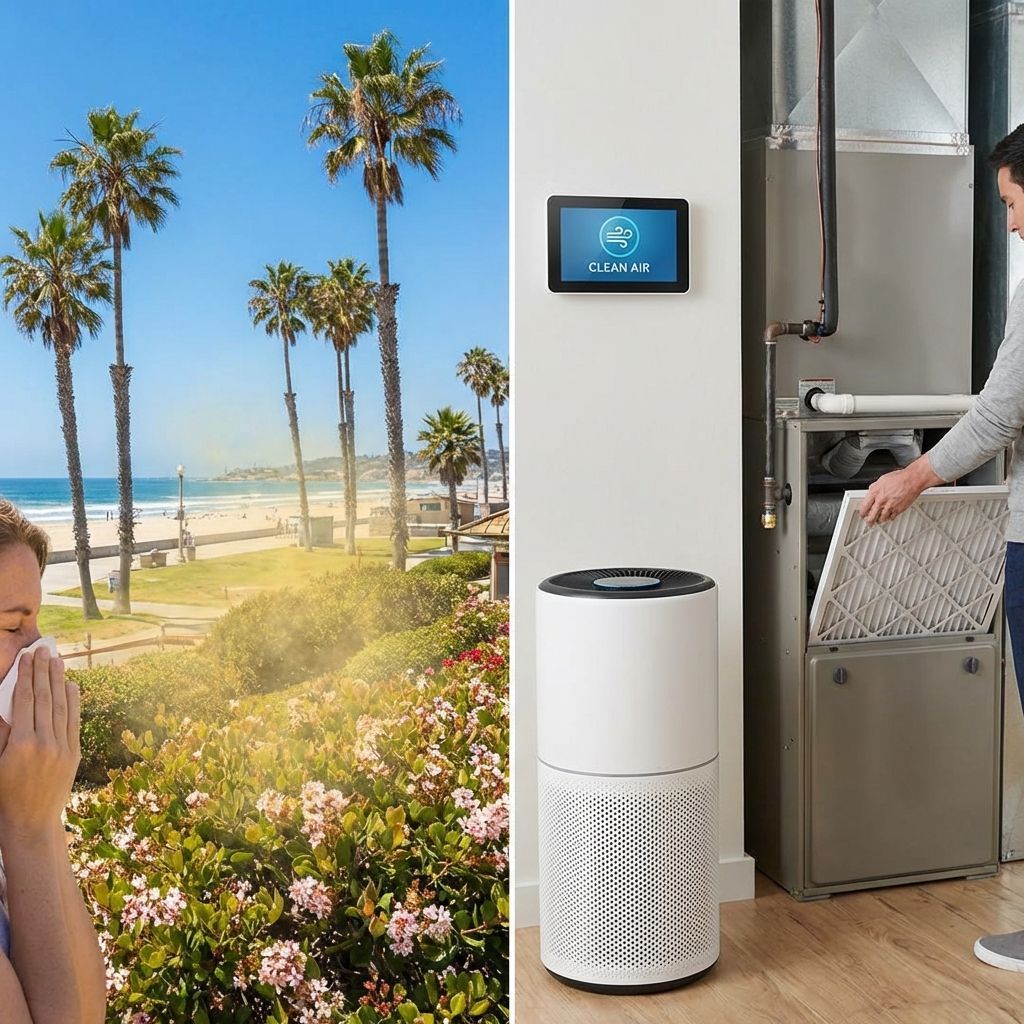
You moved to San Diego for the perfect weather. So why are you sneezing, congested, and dealing with itchy eyes inside your own home? Here's the irony: San Diego's year-round mild climate that everyone envies creates the perfect conditions for continuous allergen production. While other parts of the country get winter breaks from pollen and outdoor allergens, San Diego residents face allergy triggers twelve months a year. And here's what most people don't realize—your home's indoor air quality is often 2-5 times worse than outdoor air, even in beautiful Carlsbad or coastal San Diego. Your HVAC system is either part of the problem or part of the solution. Why San Diego Allergies Never Take a Break Most of the country experiences distinct allergy seasons. Not San Diego. Our Mediterranean climate means something is always blooming, growing, or producing allergens: Year-Round Pollen Production January-March: Tree pollen from oaks, eucalyptus, and cypress kicks off early. While the rest of the country is buried in snow, San Diego trees are releasing pollen. March-June: Grass pollen season peaks. With our perfectly manicured lawns and parks remaining green year-round, grass pollen never really stops. Late Summer-Fall: Weed pollen dominates. Ragweed, sagebrush, and other weeds thrive in our dry conditions. November-December: While other regions rest, San Diego's mild winters keep mold spores active and dust mites thriving in our consistently humid coastal air. Coastal Humidity = Mold and Dust Mites Carlsbad, Encinitas, and coastal San Diego neighborhoods face unique indoor air quality challenges. The marine layer brings moisture that creates ideal conditions for: Dust mites: These microscopic allergens thrive in humidity levels above 50%. Coastal San Diego homes often exceed this, especially during marine layer mornings. Mold growth: Bathrooms, crawl spaces, and HVAC systems in coastal homes develop mold faster than inland properties. Mildew: That musty smell when you turn on your AC? That's mold and mildew in your ductwork releasing spores into your home. Santa Ana Winds Stir Everything Up When Santa Ana winds blow through San Diego County, they don't just bring fire danger—they blast pollen, dust, and allergens from inland areas directly into coastal communities. Air quality plummets, and allergy symptoms spike. How Your HVAC System Makes Allergies Worse Most San Diego homeowners don't realize their heating and cooling system is actively circulating allergens throughout their home: Dirty Air Filters Accomplish Nothing That air filter in your return vent? If you can't remember the last time you changed it, it's not filtering anything—it's just restricting airflow and forcing your system to work harder while allergens flow freely. Standard 1-inch fiberglass filters capture large particles but allow pollen, mold spores, and dust mite waste to pass straight through. You're running your AC and getting zero allergy relief. Dirty Ductwork = Allergen Highway Your ductwork accumulates years of dust, pollen, pet dander, and mold. Every time your HVAC system runs, it blows these allergens directly into your living spaces. Coastal San Diego homes face accelerated duct contamination from salt air moisture that promotes mold growth inside ducts. If you've never had your ducts professionally cleaned, they're definitely contributing to your allergy symptoms. Inadequate Ventilation Traps Allergens Modern San Diego homes are built tighter for energy efficiency. Great for your utility bill, terrible for indoor air quality. Without proper ventilation, allergens, cooking odors, cleaning chemicals, and other pollutants get trapped inside and recirculated. Humidity Imbalance Coastal Carlsbad homes often have too much humidity (promoting mold and dust mites), while inland San Diego properties get too dry (allowing pollen and dust to remain airborne longer). Your HVAC system should regulate humidity—but most basic systems don't. Signs Your HVAC Is Causing Your Allergy Problems How do you know if your heating and cooling system is making allergies worse? Watch for these warning signs: Symptoms worse at home: You feel better outside or at work, but suffer at home Immediate reaction when AC turns on: Sneezing, congestion, or coughing starts within minutes of your system cycling Musty odor from vents: That smell is mold and mildew releasing spores into your air Visible dust around vents: Dust accumulation around supply registers shows your system is circulating particles Allergy symptoms year-round: If you never get relief, indoor allergens are likely the culprit Worse symptoms in certain rooms: Indicates ductwork problems in specific zones Black streaks around vents: Mold growth visible at vent openings HVAC Solutions That Actually Reduce Allergies The good news? Your HVAC system can transform from allergen distributor to allergy relief powerhouse with the right upgrades: 1. High-Efficiency Air Filtration Upgrade from basic fiberglass filters to MERV 11-13 pleated filters or HEPA filtration systems. These capture: 99% of pollen particles Dust mite waste and pet dander Mold spores Bacteria and virus particles Smoke and fine particulates (crucial during wildfire season) Important: Higher efficiency filters require professional assessment. Your system needs adequate airflow capacity to handle denser filters without restricting performance. 2. Whole-Home Air Purification UV light systems installed in your ductwork kill mold, bacteria, and viruses. These are especially effective in coastal San Diego homes where humidity creates ideal conditions for microbial growth. Ionic air purifiers and electrostatic precipitators capture particles that filters miss. These systems work continuously, cleaning your air 24/7. 3. Professional Duct Cleaning If you've lived in your San Diego home for 3+ years without duct cleaning, years of allergen accumulation are being blown into your living spaces daily. Professional duct cleaning removes: Accumulated dust and pollen Mold and mildew growth Pet dander and hair Construction debris (if you've remodeled) Rodent droppings and nesting materials Coastal homes should have ducts cleaned every 3-5 years. Inland properties can extend to 5-7 years. 4. Humidity Control Systems Dehumidifiers integrated with your HVAC system keep coastal homes below the 50% humidity threshold where dust mites and mold thrive. Humidifiers help inland San Diego homes maintain 30-50% humidity, preventing dry air from keeping pollen and dust particles airborne longer. 5. Energy Recovery Ventilators (ERV) ERV systems bring fresh outdoor air into your home while exhausting stale indoor air—without wasting energy on heating or cooling. This continuous air exchange prevents allergen buildup while maintaining comfort and efficiency. 6. Smart Thermostat + Air Quality Monitoring Modern smart thermostats with integrated air quality sensors detect VOCs, particulates, and humidity levels. They automatically adjust your system's operation to improve air quality, running longer cycles at lower speeds to maximize filtration. Immediate Steps You Can Take Today While professional HVAC upgrades provide the best long-term relief, start with these actions right now: Change Your Air Filter Immediately If you can't remember the last change, do it today. Set a monthly reminder on your phone. During peak pollen season (March-June in San Diego), check filters every 2-3 weeks. Clean Around Your Indoor Unit Dust and vacuum around your indoor air handler or furnace. Keep the area clear of storage items that collect dust. Check and Clean Supply Vents Remove vent covers and vacuum inside the first few feet of ductwork you can reach. Wipe down vent covers with damp cloths. Run Your AC Fan Continuously Set your thermostat fan to "on" instead of "auto." This provides continuous filtration even when not actively cooling, helping to remove allergens constantly. Control Indoor Humidity Use bathroom exhaust fans during and after showers. Run kitchen exhaust when cooking. Open windows during mild San Diego days to air out your home (when outdoor pollen counts are low). Schedule Professional Assessment Have a licensed HVAC technician evaluate your system's air quality capabilities. They can recommend the most effective solutions for your specific home and budget. Why Spring is the Critical Time to Act We're approaching San Diego's peak allergy season. Grass pollen explodes in March and April. Trees are already pollinating. By the time symptoms are unbearable, HVAC companies are booked weeks out. Act now—before the pollen tsunami hits—to: Get on the schedule before the spring rush Have systems installed and working before peak allergy season Test and adjust new equipment before you desperately need it Take advantage of off-season pricing and promotions The Real Cost of Doing Nothing San Diego residents spend billions annually on allergy medications, doctor visits, and lost productivity. But the costs go beyond money: Chronic fatigue: Poor sleep from nighttime congestion affects work performance and quality of life Sinus infections: Chronic allergies lead to repeated sinus infections requiring antibiotics Asthma development: Uncontrolled allergies can trigger or worsen asthma, especially in children Reduced home enjoyment: You can't relax in a home that makes you sick Professional HVAC air quality improvements cost $500-3,000 depending on solutions chosen. Compare that to years of suffering, medication costs, and medical bills. What to Expect From Professional Indoor Air Quality Service When you call a qualified Carlsbad or San Diego HVAC company for air quality assessment: Comprehensive evaluation: Technicians inspect your entire HVAC system, ductwork, and home for allergen sources Air quality testing: Professional testing identifies specific pollutants and allergen levels Customized recommendations: Solutions tailored to your home's specific challenges (coastal moisture, inland dryness, etc.) Transparent pricing: Written estimates for recommended improvements Professional installation: Certified technicians install upgrades to manufacturer specifications Follow-up testing: Verify improvements in air quality after installation Breathe Easier in Your Carlsbad or San Diego Home Heat Cool SD specializes in indoor air quality solutions for San Diego County homes. We understand the unique challenges of coastal humidity, year-round pollen, and San Diego's specific allergen profile. Our air quality services include: Free indoor air quality assessments High-efficiency filtration system installation Whole-home air purification systems Professional duct cleaning and sanitization Humidity control solutions UV light air treatment Energy recovery ventilator installation Smart thermostat and air quality monitoring CALL (619) 361-7325 TODAY FOR YOUR FREE AIR QUALITY CONSULTATION Don't suffer through another San Diego allergy season. Let us show you how the right HVAC improvements can transform your home's air quality and give you the relief you deserve. Serving Carlsbad, Encinitas, San Marcos, Vista, Oceanside, and all North County San Diego communities. Licensed, insured, and committed to helping San Diego residents breathe easier at home.

Living near the San Diego coast comes with incredible perks—ocean breezes, stunning sunsets, and that perfect year-round climate everyone envies. But there's something most coastal homeowners don't realize until it's too late: salt air is slowly destroying your HVAC system. If you live in Pacific Beach, Ocean Beach, La Jolla, Carlsbad, Encinitas, or anywhere within a few miles of the ocean, your air conditioning system faces unique challenges that inland homes don't deal with. The salty, humid coastal air accelerates corrosion, reduces efficiency, and can shorten your system's lifespan by years. At Heat Cool SD, we've seen it countless times—AC units that should last 15 years failing at 8 or 9 because of coastal conditions. The good news? Understanding these challenges and taking preventive action can save you thousands in premature replacements and emergency repairs. Here's everything San Diego coastal homeowners need to know about protecting their HVAC investment. Why Salt Air Is Your AC System's Worst Enemy Salt is incredibly corrosive. When ocean spray, fog, and salty air reach your outdoor AC unit (called the condenser), here's what happens: 1. Accelerated Corrosion of Metal Components Your AC's outdoor unit contains aluminum fins, copper coils, and various metal components. Salt deposits create an electrochemical reaction that causes rapid corrosion—much faster than normal oxidation. Over time, this leads to: Corroded condenser coils that can't transfer heat effectively Rusted electrical connections that cause system failures Deteriorated cabinet panels that expose internal components to more damage Failed fan motors due to salt buildup in bearings 2. Clogged and Damaged Condenser Fins The thin aluminum fins on your outdoor unit are designed to maximize airflow. Salt buildup clogs these fins, forcing your system to work harder. Even worse, salt corrosion can eat through the fins entirely, reducing heat exchange efficiency by 30% or more. 3. Reduced Heat Transfer Efficiency As salt and mineral deposits accumulate on coils, they create an insulating layer that prevents proper heat transfer. Your AC runs longer cycles trying to cool your home, driving up energy bills and wearing out components faster. 4. Electrical Component Damage Salt conducts electricity, which means it can cause short circuits and damage to sensitive electrical components. Contactors, capacitors, and control boards are especially vulnerable in coastal environments. How Coastal Humidity Adds to the Problem San Diego's coastal areas experience higher humidity levels than inland regions, especially during marine layer mornings and evenings. This humidity creates additional HVAC challenges: Increased Condensation = More Corrosion When humid air contacts cold AC components, condensation forms. This moisture mixed with salt creates a corrosive cocktail that's constantly attacking your system. Mold and Mildew Growth High humidity in your ductwork and air handler creates ideal conditions for mold growth. This not only affects indoor air quality but can also clog drain lines and damage insulation. Harder Work for Your AC Humid air holds more heat energy than dry air, meaning your AC has to work harder to achieve the same temperature. This is why coastal homes often feel "sticky" even when the thermostat is set to a comfortable temperature. Specific Areas Most Affected by Coastal HVAC Problems Not all San Diego neighborhoods face the same level of risk. Distance from the ocean makes a huge difference: 🌊 Highest Risk (0-2 miles from ocean): Pacific Beach, Ocean Beach, Mission Beach La Jolla Shores, Bird Rock Carlsbad Village, Leucadia Encinitas coastal areas Imperial Beach, Coronado 🌊 Moderate Risk (2-5 miles from ocean): Clairemont, Bay Park, Bay Ho Point Loma (inland areas) North Park, Normal Heights Del Mar Heights Cardiff-by-the-Sea inland areas 🌊 Lower Risk (5+ miles inland): Mira Mesa, Scripps Ranch Poway, Rancho Bernardo Inland Carlsbad and Encinitas East County areas Even if you're not on the beach, prevailing ocean winds can carry salt spray miles inland, especially during strong onshore flow periods. Warning Signs Your Coastal AC Is Suffering Salt Damage Catch these problems early and you can prevent expensive failures: ⚠️ Visible corrosion or rust on the outdoor unit cabinet or components ⚠️ White or greenish deposits on copper lines or aluminum fins ⚠️ Bent, damaged, or deteriorating condenser fins ⚠️ Rising energy bills without increased usage ⚠️ Longer cooling cycles or AC running constantly ⚠️ Weak airflow from vents ⚠️ Strange smells (musty, metallic, or burning odors) ⚠️ Frequent refrigerant leaks (sign of corroded coils) ⚠️ System freezing up regularly If you notice any of these signs, it's time for a professional inspection. Waiting too long often means the difference between a repair and a full replacement. How to Protect Your Coastal HVAC System The good news? You can significantly extend your AC's lifespan with proper protection and maintenance: 1. Install a Coastal-Rated AC System If you're replacing your unit, choose one specifically designed for coastal environments: Coated condenser coils with special anti-corrosion protection Marine-grade outdoor cabinets with powder-coated finishes Stainless steel or coated screws and fasteners Enhanced drainage systems to handle higher condensation Brands like Carrier, Trane, and Lennox offer coastal protection packages that add years to system life. 2. Regular Coil Cleaning (2-4 Times Per Year) This is the single most important maintenance task for coastal systems. Professional coil cleaning removes salt deposits before they cause permanent damage. Don't wait for your annual tune-up—coastal units need cleaning at least twice yearly, preferably quarterly. 3. Apply Anti-Corrosion Coatings HVAC technicians can apply special protective coatings to condenser coils and fins. These create a barrier against salt and moisture. While not foolproof, they significantly slow corrosion. 4. Improve Drainage and Ventilation Ensure your outdoor unit has proper drainage so condensation doesn't pool around components. Make sure there's adequate airflow around the unit (at least 2 feet of clearance on all sides). 5. Install Your Unit Strategically If possible, locate your outdoor unit on the side of your house that's most protected from direct ocean winds. Even a few extra feet of protection matters. Consider installing a protective awning or cover that allows airflow but blocks direct salt spray. 6. Rinse Your Outdoor Unit Monthly Using a garden hose (low pressure, never a pressure washer), gently rinse the outside of your condenser unit to remove salt buildup. Do this from the inside out to avoid pushing debris deeper into the fins. Never spray directly into the top of the unit or at electrical components. 7. Upgrade Your Air Filter Coastal homes should use higher-quality air filters (MERV 8-11) and change them more frequently—every 30-60 days instead of 90. This helps capture salt particles and humidity-related contaminants before they reach your system. 8. Professional Maintenance is Non-Negotiable Coastal AC systems need professional maintenance at least twice per year—spring and fall minimum. A qualified technician will: Deep clean condenser coils Check for early signs of corrosion Test refrigerant levels (leaks are common in coastal units) Inspect electrical connections Clean or replace filters Check condensate drain operation Verify system efficiency The Cost of Ignoring Coastal HVAC Problems Let's talk numbers. Here's what neglecting coastal-specific maintenance typically costs San Diego homeowners: Scenario 1: No preventive maintenance System lifespan: 8-10 years (instead of 15-20) Premature replacement cost: $6,000-$12,000 Higher energy bills: $200-400 extra per year Emergency repairs: $500-2,000 every few years Scenario 2: Proper coastal maintenance System lifespan: 15-18 years Maintenance cost: $300-500 per year Repair costs: Minimal, mostly preventive Energy efficiency: Maintained at optimal levels The math is clear: Spending $400-500 annually on proper maintenance saves you thousands compared to premature replacement. Should You Replace Your Corroded Coastal AC? If your system already has significant salt damage, here's how to decide between repair and replacement: Consider replacement if: The system is 10+ years old AND showing corrosion Coils are heavily corroded (refrigerant leaks are a common sign) Repair costs exceed 50% of replacement cost Energy bills have increased 30% or more The system uses R-22 refrigerant (being phased out) Consider repair if: The system is under 7 years old Corrosion is minimal and caught early A protective coating can extend life significantly All major components are still functioning well A qualified HVAC technician can assess your specific situation and provide honest guidance. Heat Pump vs. Traditional AC for Coastal San Diego Given San Diego's mild climate, heat pumps are an excellent option for coastal homes. They offer: Better humidity control than traditional AC Year-round efficiency for both heating and cooling Inverter technology that reduces on/off cycling (less condensation) Same coastal protection features available as traditional AC Modern heat pumps with coastal protection packages can be the perfect solution for beachside living. Why Choose Heat Cool SD for Coastal HVAC Needs We understand San Diego's coastal climate challenges because we work in these conditions every day. Our technicians specialize in: Installing coastal-rated HVAC systems with proper protection Preventive maintenance programs designed for salt air environments Corrosion assessment and treatment Emergency repairs when coastal conditions cause sudden failures We serve all San Diego coastal communities from Imperial Beach to Carlsbad, and we understand the unique challenges each microclimate presents. Protect Your Investment Today Your HVAC system is one of your home's most expensive components. Don't let San Diego's beautiful coastal environment destroy it prematurely. Whether you need a coastal-rated system installation, specialized maintenance, or an assessment of your current unit's condition, Heat Cool SD is here to help. 📞 Call us today for a free coastal HVAC assessment We'll inspect your system, identify any salt damage or corrosion, and provide honest recommendations to protect your investment and keep your home comfortable year-round. Serving San Diego's coastal communities with specialized HVAC solutions since [year]. Licensed, insured, and committed to your comfort.